
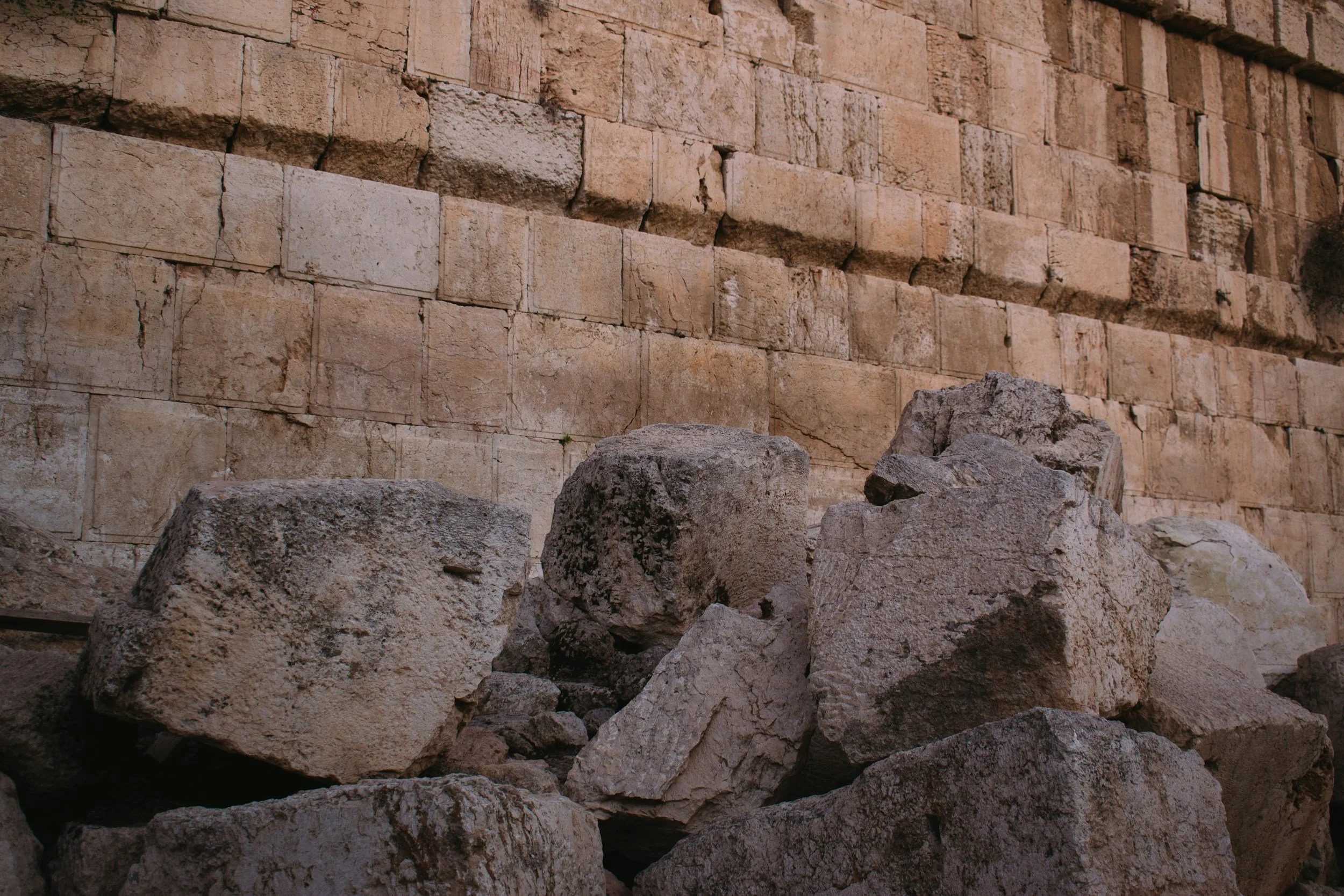
Nehemiah
The Leader Whose Zeal Outpaced His Gentleness
Can someone be completely right about a principle and still handle people badly while defending it? It's an uncomfortable question, because we tend to assume that being correct settles the matter — that if the cause is genuinely important enough, the method used to defend it becomes almost beside the point. Nehemiah's story raises that exact tension, and refuses to let either side of it off the hook.
Nehemiah is, in many ways, a model of what focused, strategic, God-dependent leadership looks like. He organizes an impossible building project against constant sabotage and finishes it in record time. And by the end of his story, this same man is pulling out people's hair and threatening merchants with violence in defense of principles that were genuinely worth defending. Both of those things are true of the same leader, and Scripture records both without flinching from either one — which is exactly why his story belongs in this course.
Who Was Nehemiah?
Nehemiah's position, as cupbearer to the Persian king Artaxerxes, was one of unusual trust and proximity to power — a role that required the king to trust him with his very life, since the cupbearer tasted the king's wine before he drank it. It's from that position of comfort and security that Nehemiah receives devastating news from Jerusalem: the city walls his ancestors had once called home lay broken down, its gates burned, the exiles who had returned there living in disgrace and vulnerability.
"And they said to me, 'The remnant there in the province who had survived the exile is in great trouble and shame. The wall of Jerusalem is broken down, and its gates are destroyed by fire.'" (Nehemiah 1:3, ESV)
The Positive: Prayerful Strategy and Perseverance
Nehemiah's response to this news is the first thing worth emulating in his entire story. He doesn't immediately act, petition the king, or start making plans. He grieves first.
"As soon as I heard these words I sat down and wept and mourned for days, and I continued fasting and praying before the God of heaven." (Nehemiah 1:4, ESV)
Days pass before Nehemiah takes any visible action at all. When he finally does approach the king — a moment that could cost him his position or his life if handled poorly — his instinct is once more to pray before he speaks:
"Then the king said to me, 'What are you requesting?' So I prayed to the God of heaven. And I said to the king...'" (Nehemiah 2:4-5, ESV)
That instinct to pray in the very middle of a conversation, before answering a king's direct question, reveals a leader whose dependence on God wasn't reserved for quiet moments alone — it operated in real time, under real pressure.
Once Nehemiah arrives in Jerusalem, his strategic instincts are just as impressive as his spiritual ones. Rather than announcing his plans immediately, he inspects the ruined walls quietly, at night, telling no one what he intends to do:
"I got up in the night... I inspected the walls of Jerusalem that were broken down and its gates that had been destroyed by fire... And the officials did not know where I had gone or what I was doing." (Nehemiah 2:12-13, 16, ESV)
Only after seeing the full scope of the problem for himself does Nehemiah bring the plan to the people — and even then, he organizes the work with remarkable practical wisdom, assigning each family to rebuild the section of wall nearest their own home, so that ownership and motivation would be built directly into the structure of the project itself (Nehemiah 3). When opposition escalates from mockery into actual threats of armed attack, Nehemiah doesn't retreat or panic. He adapts:
"From that day on, half of my servants worked on construction, and half held the spears, shields, bows, and coats of mail... each with his weapon at his side." (Nehemiah 4:16-18, ESV)
The result of all that prayer, strategy, and perseverance is almost unbelievable given the scale of the task: a wall that had lain in ruins for generations, rebuilt in just fifty-two days.
"So the wall was finished... in fifty-two days. And when all our enemies heard of it, all the nations around us were afraid and fell greatly in their own esteem, for they perceived that this work had been accomplished with the help of our God." (Nehemiah 6:15-16, ESV)
That's Nehemiah at his very best — a leader whose grief led to prayer, whose prayer led to careful strategy, and whose strategy held steady under real threat until the work was done.
The Tension: Zeal That Turned Harsh
But Nehemiah's story doesn't end with the completed wall, and the chapters that follow reveal a very different side of the same leader. Years later, as governor, Nehemiah discovers that the people have drifted back into practices God had explicitly warned against — including intermarriage with surrounding nations in direct violation of the covenant that had, generations earlier, led Israel into exile in the first place. His response is recorded without any softening:
"And I confronted them and cursed them and beat some of them and pulled out their hair. And I made them take an oath in the name of God..." (Nehemiah 13:25, ESV)
That's not a metaphor or a figure of speech — it's a physical description of Nehemiah's own hands, striking the very people he was governing. The same pattern shows up again just a few verses earlier, when Nehemiah discovers merchants selling goods on the Sabbath. He doesn't merely correct the practice — he confronts the nobles directly with open contempt for their leadership, then resorts to threats of force against the merchants themselves:
"Then I confronted the nobles of Judah and said to them, 'What is this evil thing that you are doing, profaning the Sabbath day?'" (Nehemiah 13:17, ESV)
"If you do so again, I will lay hands on you." (Nehemiah 13:21, ESV)
Nehemiah was defending something genuinely important in both cases — covenant faithfulness that Israel's own history had already proven was not optional, a lesson paid for through exile itself. The text doesn't suggest he was wrong about the stakes. But it also doesn't soften what he actually did in response, and it's worth resisting the urge to explain it away too quickly on his behalf.
Why This Matters
It would be easy to read these final chapters and simply excuse Nehemiah, reasoning that the cause was important enough to justify the method. But Scripture itself doesn't offer that excuse — it simply records what happened, in Nehemiah's own words, without editorial comment softening the violence of his response. That restraint in the text is itself instructive. It leaves the tension fully intact rather than resolving it for the reader, inviting a harder question than "was he right about the issue" — namely, "was this how a leader who feared God should have handled being right?"
The Principle: How You Defend What's Right Still Matters
Here is the leadership principle Nehemiah's story leaves behind: conviction and decisiveness are essential to leadership, but how a leader treats people while defending what's right still matters.
Being correct about the stakes doesn't automatically justify every method used to address them. Leaders can hold firmly, even fiercely, to a principle worth protecting, and still need to examine honestly whether the way they're enforcing it reflects the character they're actually trying to protect in the first place. Nehemiah's zeal for covenant faithfulness was not the problem. The problem was what that zeal was allowed to become once it stopped being paired with the same prayerful restraint that had characterized his leadership during the wall-building itself.
One practical test worth carrying forward: after a confrontation, ask honestly whether the other person walked away feeling corrected toward repentance, or simply attacked. The difference often has less to do with the truth of what was said and more to do with how it was delivered — and it's a question worth asking specifically because being right makes it so easy to skip asking it at all.
How This Shows Up Today
It's entirely possible to be completely right about a principle — a doctrinal issue, an ethical line, a covenant commitment worth defending — and still do real relational damage in how that principle gets defended. Leaders today face this constantly, in person and online: righteous conviction expressed in a way that wins the argument decisively but loses the person entirely, sometimes for good. A pastor confronting sin in a way that humiliates rather than restores. A parent correcting a real wrong with a harshness the child remembers long after the lesson itself is forgotten. A leader so certain of their own rightness that the method stops being examined at all, because the cause feels like justification enough on its own.
Nehemiah's story doesn't ask leaders to abandon conviction or soften every hard confrontation into something comfortable. His grief-driven prayer and his relentless strategy against real opposition are still worth emulating without reservation. But his later chapters ask something just as important: to examine method as carefully as the cause itself is examined, because Scripture's own honesty about Nehemiah's harshness suggests that even righteous zeal needs a check it cannot provide for itself.
Closing Thought
What makes Nehemiah's story so valuable for this course is precisely its refusal to resolve neatly into either a hero's story or a cautionary tale. The same man who wept for days before acting, who prayed in the middle of a conversation with a king, who organized an impossible rebuilding project and finished it in fifty-two days against constant threat — that same man later pulled out people's hair in a fit of righteous anger. Neither version of Nehemiah cancels out the other. Both are simply true, recorded side by side without apology, of one real leader who genuinely loved God's people and genuinely lost his temper defending them. That combination is worth sitting with rather than resolving too quickly, because most leaders will find themselves somewhere in both halves of his story eventually — capable of extraordinary prayerful patience in one season, and in danger of letting zeal outrun gentleness in another. The wall Nehemiah built has long since crumbled again. The question his story leaves standing is whether the people we lead walk away from our convictions feeling drawn toward repentance, or simply bruised by how right we insisted on being.
Take Action:
Grieve before you act. Identify a situation you're currently frustrated or angry about. Before confronting it, set aside real time to bring it to God first — honestly, even with grief — rather than moving straight to correction.
Run the "walked away" test. Think back to your last confrontation over something you were right about. Ask honestly: did the other person walk away feeling corrected toward repentance, or simply attacked? Write down what you'd do differently.
Separate the cause from the method. Pick one conviction you hold strongly. Write down, specifically, how you tend to defend it in conversation — then ask a trusted person whether your delivery matches the character you're trying to protect.
Build in a pause before confrontation. For the next disagreement or correction you need to deliver, commit to waiting a set period (an hour, a day) and praying specifically for gentleness before you speak, rather than responding in the heat of the moment.
Ask someone to check your zeal. Identify one person with permission to tell you honestly when your conviction has tipped into harshness. Ask them directly this week whether they've seen that pattern in you, and how it landed.
The Conversation:
Nehemiah wept and prayed for days before acting on the news about Jerusalem's walls, yet years later pulled out people's hair in anger over intermarriage. What do you think changed between those two responses?
The lesson suggests being right about a principle doesn't automatically justify the method used to defend it. Have you ever seen someone (or yourself) win an argument but lose the relationship in the process?
Nehemiah prayed silently in the middle of a conversation with the king before answering him. What would it look like for you to build that same kind of real-time dependence on God into high-pressure conversations you have?
Scripture records Nehemiah's harshness without excusing or explaining it away. Why do you think it matters that the text doesn't soften what he did, even though his cause was legitimate?
Nehemiah's careful, prayerful strategy built a wall in 52 days against constant opposition — but his zeal later damaged relationships he was meant to shepherd. Where in your own leadership are you more prone to drift: toward passivity that avoids necessary confrontation, or toward zeal that handles it too harshly?