
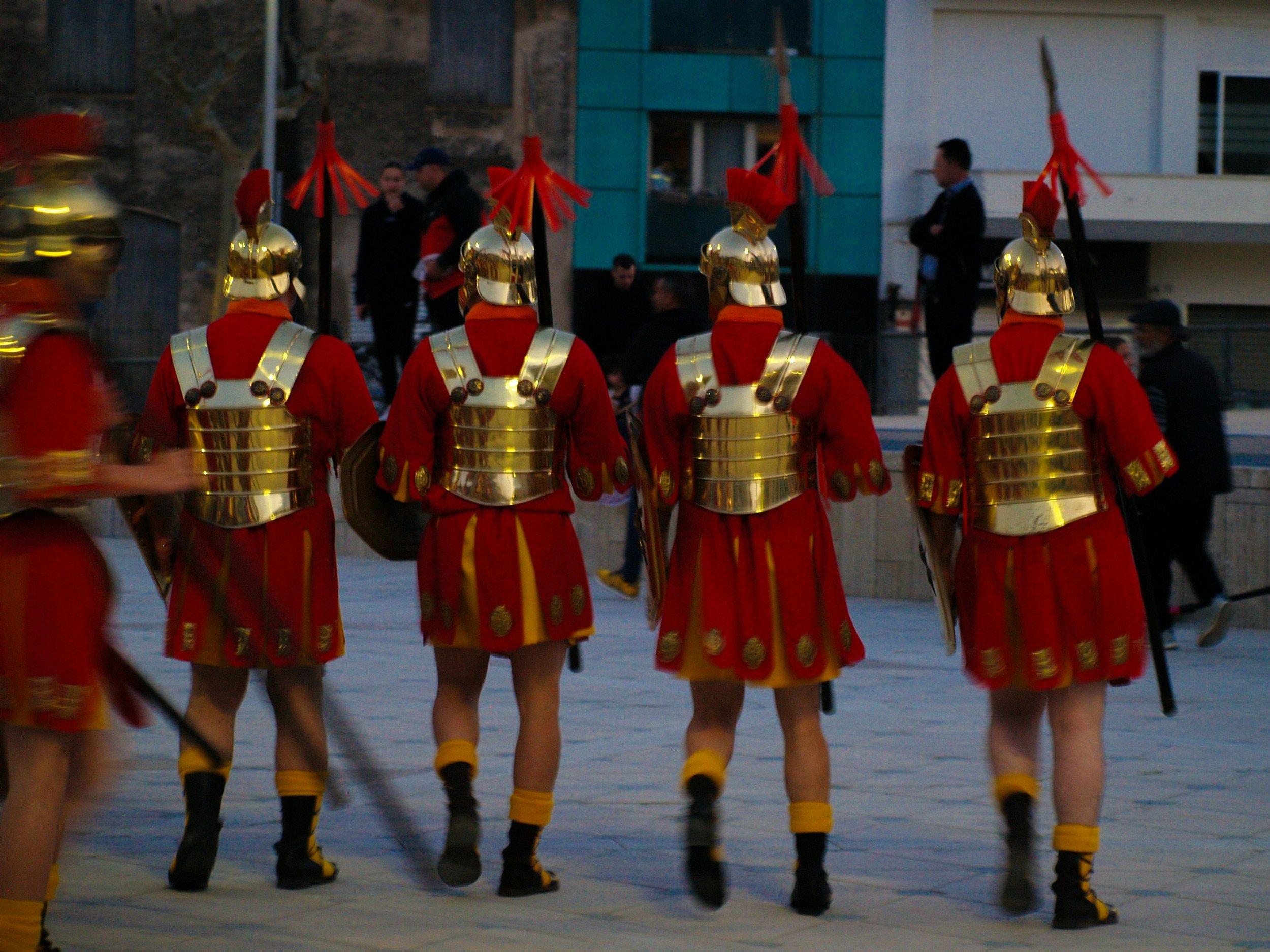
Put on the Armor of God
Getting Dressed Without Thinking
Here's a question to sit with for a second: when was the last time you got dressed without thinking about it?
Probably this morning. You didn't stand in front of your closet weighing the tactical advantages of a t-shirt. You just... got dressed. It's automatic. Muscle memory. You could do it half-asleep, and most days, you basically do.
That's exactly the problem we're going to talk about today. Because Paul doesn't tell us to grab our armor and go. He tells us to put it on — on purpose, piece by piece, like it actually matters whether we skipped a part. And if we're honest, most of us are walking around spiritually half-dressed and don't even realize it, because putting on armor was never automatic for us in the first place. Nobody wakes up and instinctively reaches for the belt of truth the way they reach for their car keys.
So today isn't really an Ephesians 6 history lesson. It's an inventory. It's about looking inward and asking: which pieces did I forget to put on this morning?
Let's Read It Together
Ephesians 6:10-18 (ESV)
"Finally, be strong in the Lord and in the strength of his might. Put on the whole armor of God, that you may be able to stand against the schemes of the devil. For we do not wrestle against flesh and blood, but against the rulers, against the authorities, against the cosmic powers over this present darkness, against the spiritual forces of evil in the heavenly places. Therefore take up the whole armor of God, that you may be able to withstand in the evil day, and having done all, to stand firm. Stand therefore, having fastened on the belt of truth, and having put on the breastplate of righteousness, and, as shoes for your feet, having put on the readiness given by the gospel of peace. In all circumstances take up the shield of faith, with which you can extinguish all the flaming darts of the evil one; and take the helmet of salvation, and the sword of the Spirit, which is the word of God, praying at all times in the Spirit, with all prayer and supplication. To that end, keep alert with all perseverance, making supplication for all the saints."
Get your own Bible and read it slowly if you can. Notice how the passage builds. Paul doesn't start with the armor — he starts with strength. "Be strong in the Lord and in the strength of his might." Before a single piece of equipment gets mentioned, Paul reminds us whose strength this actually is. This was never about you working up enough willpower to win a spiritual fight. It's about being strong in him.
Paul writes this near the end of a letter, almost like a closing charge. He's just spent five chapters talking about grace, unity, marriage, family, ordinary work. Real, everyday life stuff. And then he ends with, essentially, "Now go put on your armor, because you're at war."
That's worth pausing on. He doesn't say "you might be at war." He says we "wrestle against... the spiritual forces of evil in the heavenly places" — present tense, ongoing, real. The Christian life, in Paul's mind, isn't neutral ground. It's contested territory. And you don't wander into contested territory in your pajamas.
Why "On Purpose" Matters
Notice the verb Paul uses: put on. Not "have" the armor. Not "own" the armor. Not even "learn about" the armor. Put it on.
You can have a fire extinguisher in your closet and still burn your kitchen down if you never take it out and use it. Same idea here. Knowing the truth doesn't protect you if you haven't put on the belt of truth today. Believing in righteousness doesn't cover your heart if the breastplate is sitting in the corner, unused, gathering dust while you walk out the door exposed.
This is where "looking inward" comes in. It's easy to treat the armor like a list of doctrines to mentally check off — yep, I believe that, next. It's much harder, and much more useful, to ask: where in my actual, specific life am I currently unarmored?
Let's walk through each piece slowly. Not as ancient history, but as a mirror.
The Belt of Truth
The belt was the first thing a Roman soldier put on, and it held everything else together. His sword hung from it. His tunic was gathered up in it so he could move quickly instead of tripping over loose fabric. Without the belt, everything else on the body is loose, flopping, getting in the way.
"Stand therefore, having fastened on the belt of truth" (Ephesians 6:14, ESV). Truth is what holds the rest of your life together — not truth in the abstract, not "truth" as a doctrine statement you'd recite in a Bible study, but truth about you. Your actual motives. Your actual excuses. The stories you quietly tell yourself so you can feel okay about things you already know aren't okay.
Jesus said, "the truth will set you free" (John 8:32, ESV) — but truth only sets free the people willing to look at it. A belt that's never fastened doesn't hold anything together; it just sits there looking like protection.
Ask yourself: Where am I currently believing — or telling someone else — something that isn't quite true, because the truth is less comfortable?
The Breastplate of Righteousness
The breastplate covered the vital organs: the heart, the lungs, the stuff that keeps a person alive. Losing this piece in battle wasn't a minor injury. It was fatal.
"...and having put on the breastplate of righteousness" (Ephesians 6:14, ESV). This righteousness isn't something you manufacture through good behavior. Paul is clear elsewhere that "the righteousness of God has been manifested... through faith in Jesus Christ for all who believe" (Romans 3:21-22, ESV). The breastplate is Christ's righteousness, not yours — but you still have to put it on. You still have to let it actually guard your heart instead of leaving your heart open to whatever accusation, shame, or self-hatred wants to walk in and set up camp there.
Ask yourself: What accusation about myself have I been letting sit unguarded against my heart — something I know isn't true of who I am in Christ, but I've let in anyway?
Feet Fitted with the Readiness of the Gospel of Peace
Roman soldiers wore sandals reinforced with hobnails or spikes on the soles — built for traction, so a soldier could stand his ground in close combat without slipping in mud or blood.
"...and, as shoes for your feet, having put on the readiness given by the gospel of peace" (Ephesians 6:15, ESV). This piece is about being ready to move — ready to have a hard conversation, ready to bring peace into a tense room, ready to walk toward someone instead of away from them — because your footing is secure. Notice the word "readiness." This isn't passive. It's a soldier standing on solid ground, prepared to advance.
Ask yourself: Is there somewhere I've been avoiding standing my ground, or avoiding bringing peace, because I don't feel steady enough to go there?
The Shield of Faith
The shield Paul has in mind — the thureos — wasn't a small round buckler. It was a large, rectangular body shield, big enough that Roman soldiers in formation could lock their shields together, wall to wall, and advance as a unit that fire couldn't easily penetrate.
"In all circumstances take up the shield of faith, with which you can extinguish all the flaming darts of the evil one" (Ephesians 6:16, ESV). Notice: extinguish, not just deflect. Roman shields were sometimes soaked in water before battle specifically so flaming arrows would hiss out on contact instead of catching the wood on fire. Faith isn't a private hobby you keep to yourself. It's a shield — something that puts out the fire of doubt, temptation, and whispered lies before they can spread.
And notice this too — faith was never meant to be carried alone. Shields locked together. You were never meant to fight this battle in isolation.
Ask yourself: What flaming arrow keeps getting through — the same doubt, the same temptation, the same lie — and what would it look like to actually raise the shield next time instead of just absorbing the hit?
The Helmet of Salvation
Head injuries are different from other injuries. Mess with someone's head and you mess with everything — their judgment, their identity, their sense of who they even are.
"...and take the helmet of salvation" (Ephesians 6:17, ESV). The helmet protects your mind — specifically, your confidence in what God has already done for you. Paul writes elsewhere that we should "put on... for a helmet the hope of salvation" (1 Thessalonians 5:8, ESV). Hope, guarding the mind. A lot of spiritual defeat starts as a mind that simply forgot it was already saved, already secure, already loved — and started fighting battles it had no business fighting, trying to earn a status it already had.
Ask yourself: Have I been thinking about myself lately in a way that doesn't match what's actually true — like I still have something to prove or earn?
The Sword of the Spirit
Here's the twist worth noticing: every other piece in this list is defensive. A belt, a breastplate, shoes, a shield, a helmet — all of it protects. The sword is the one offensive weapon Paul names.
"...and the sword of the Spirit, which is the word of God" (Ephesians 6:17, ESV). This is the piece we tend to neglect most, honestly, because it takes the most work. A shield you can grab in an emergency. A sword you have to have already trained with, already carried, already know how to swing — or it's dead weight in your hand when it matters most. When Jesus was tempted in the wilderness, he didn't argue with the devil using his own reasoning. Three times, he answered with Scripture (Matthew 4:4, 7, 10). He picked up the sword he'd already carried his whole life.
Ask yourself: When's the last time I actually opened Scripture — not to check a box, but like I was reaching for a weapon I genuinely needed?
And Then — Prayer
Paul doesn't list prayer as a piece of armor. He puts it right after the list, almost like a footnote that's actually the main point:
"...praying at all times in the Spirit, with all prayer and supplication. To that end, keep alert with all perseverance, making supplication for all the saints" (Ephesians 6:18, ESV).
Prayer is what keeps you dressing yourself in the first place. Nobody puts on armor once and never checks it again — armor gets loose, straps slip, pieces get knocked out of place in the middle of a fight. Prayer is the daily habit of coming back and asking, "God, what am I missing today? What do I need to put back on?" And notice — Paul says pray "at all times," "with all prayer," "for all the saints." This was never meant to be a solo habit either. Part of staying dressed is praying for the soldier standing next to you.
Bringing It Inward
Here's the honest question underneath this whole lesson: most of us don't lose spiritual battles because we don't own the armor. We lose them because we stopped putting it on. We got comfortable. We assumed yesterday's armor would still be fastened today, and it wasn't.
The good news buried in all of this is that Paul never says the battle depends on your strength. He opens the whole passage with, "be strong in the Lord and in the strength of his might" (Ephesians 6:10, ESV). You're not manufacturing courage out of nothing. You're putting on armor that's already been made, forged by someone who already won the war — you're just learning to wear it well, every single day.
So before you close this lesson, take a minute — quietly, just between you and God — and ask:
Which piece of armor have I been walking around without lately?
What would it actually look like to put that piece on today, not someday?
Don't just own the armor. Put it on — on purpose — today.
Take Action:
Which piece of armor felt the most convicting to you today, and why do you think that one hit differently?
Paul assumes the Christian life is a fight. Do you actually live like that's true, day to day? What would change if you did?
Of the six pieces, which one do you tend to neglect first when life gets busy or hard?
What's one practical, specific way you could "put on" that neglected piece this week?
What does the spiritual battle look like in your life today?
The Conversation:
What does it mean for someone to be "at war" spiritually, and why might Paul have felt it was necessary to say that so plainly?
Why do you think Paul chose the image of armor — worn on purpose, piece by piece — instead of something more passive, like a shelter or a fortress?
What's the difference between having faith, truth, or the word of God, and actually putting them on the way this passage describes?
Out of all six pieces of armor, which one seems easiest for people to neglect over time, and what tends to cause that neglect?
What role does prayer seem to play in this passage, if it isn't even counted as one of the pieces of armor itself?