
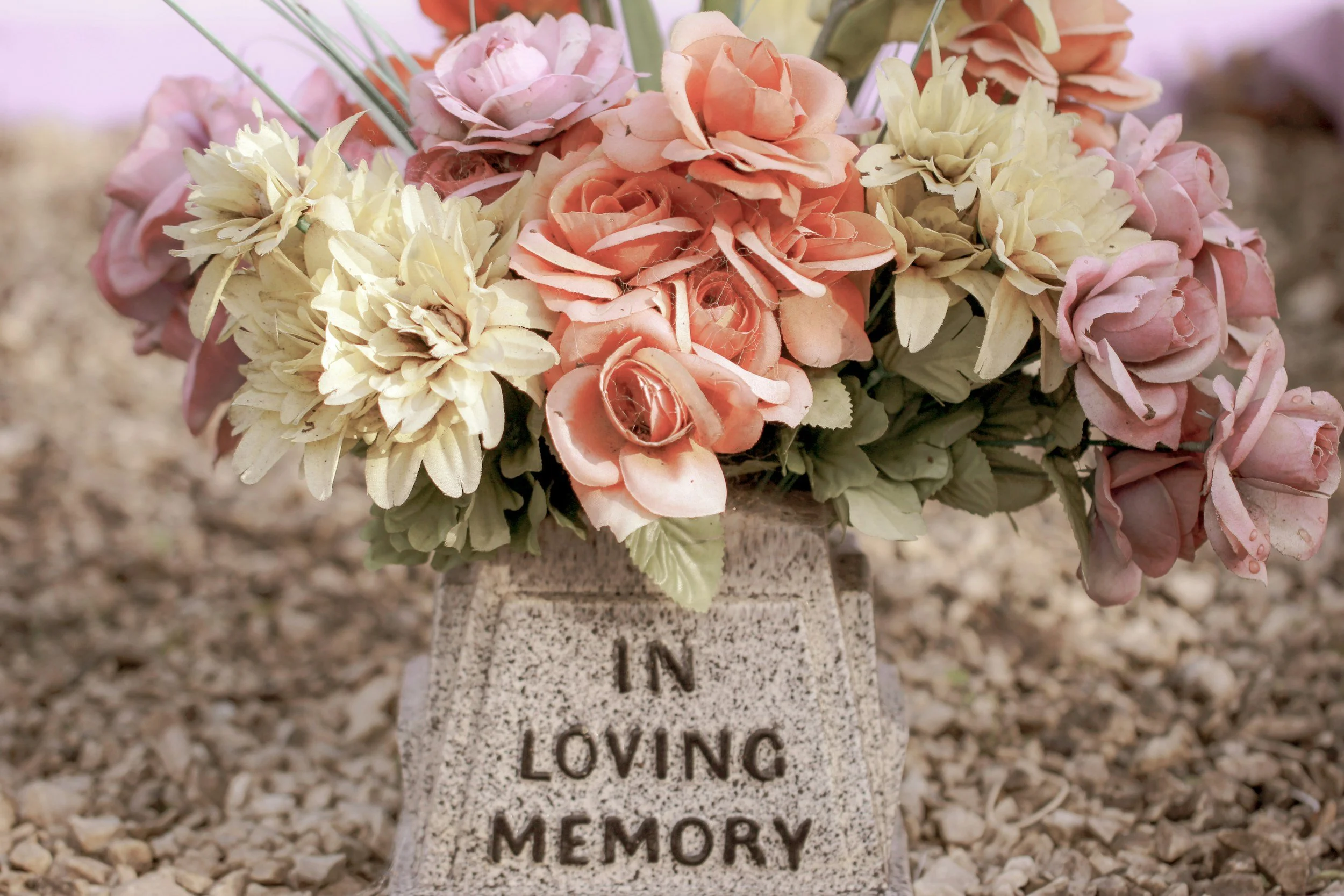
Honoring Legacy
Somewhere in grief, a quiet fear can creep in: what if I forget? What if their voice fades from memory, what if the little details — the way they laughed, the phrase they always used, the smell of their kitchen — slip away along with the sharpest edge of the pain? For a lot of Christians, this fear gets tangled up with an old, unhelpful idea that healthy grieving means eventually letting go completely. So people either grip memory so tightly it becomes its own kind of suffering, or they quietly start pulling away from it, afraid that remembering too much means they're stuck.
Here's what this lesson wants you to know: you were never supposed to let go completely, and you don't have to. Continuing to carry someone's memory, their values, even a real sense of ongoing connection to them, is not a failure to heal. It is one of the healthiest, most well-documented parts of grief — and Scripture has been telling God's people to do exactly this, on purpose, for thousands of years.
Why Remembering Well Is Part of Healing, Not a Detour From It
For much of the twentieth century, the dominant model of grief treated ongoing attachment to someone who died as a problem to be resolved — the goal was to detach and "move on." Researchers in the 1990s challenged that model directly, documenting that most bereaved people naturally maintain what's now called a continuing bond with the person they lost, and that this bond, far from being pathological, plays a genuinely positive role in their ongoing lives. This idea has become one of the most widely accepted shifts in modern grief research: remembering isn't the opposite of healing. For most people, it's part of how healing actually happens.
Not all remembering functions the same way, though, and this distinction is worth knowing. Research on memorializing has found that practices centered on remembering the person's life — their humor, their values, the specific things that made them who they were — tend to support a healthier, more sustaining connection than practices centered only on the fact of their death. In practical terms: telling stories about how someone lived tends to help more, over time, than only visiting the place where they died. Other studies tracking bereaved people over time have found that continuing bonds expressed through active memory-keeping — recalling stories, sharing who the person was — function differently than continuing bonds expressed only through holding onto their possessions, which on its own tends to be a weaker, less protective form of connection. Legacy work, in other words, isn't just sentimental. It's one of the more emotionally protective things a grieving person can do, and how you remember matters as much as whether you remember.
What Scripture Actually Says About Honoring Legacy
Scripture doesn't treat memory as something to move past quickly. It repeatedly instructs God's people to actively preserve and pass on what mattered about those who came before them.
When Israel crossed the Jordan, God commanded a physical, permanent act of remembrance.
"In the future, when your children ask you, 'What do these stones mean?' tell them... These stones are to be a memorial to the people of Israel forever." — Joshua 4:6–7
God doesn't ask Israel to simply remember privately — He commands a lasting, visible marker specifically so future generations would ask questions and hear the story. Honoring legacy, in Scripture, is often meant to be built, not just felt, and passed forward on purpose.
The book of Hebrews says plainly that a faithful life continues to speak long after the person who lived it is gone.
"And by faith Abel still speaks, even though he is dead." — Hebrews 11:4
Abel died in Genesis 4 — one of the earliest deaths recorded in Scripture — and this verse, written millennia later, says he is still speaking. Legacy, biblically, isn't a nice metaphor. It's treated as an ongoing voice, carried forward by everyone who tells the story.
That same chapter closes by picturing the faithful dead as an active, surrounding presence for those still living.
"Therefore, since we are surrounded by such a great cloud of witnesses, let us throw off everything that hinders... and let us run with perseverance the race marked out for us." — Hebrews 12:1
This image doesn't ask believers to forget those who've gone before — it pictures them as present, watching, part of the reason to keep going. Honoring someone's legacy and moving forward with your own life aren't in tension here. The legacy is precisely what helps you run.
Paul roots Timothy's faith explicitly in the faith of the women who came before him.
"I am reminded of your sincere faith, which first lived in your grandmother Lois and in your mother Eunice and, I am persuaded, now lives in you also." — 2 Timothy 1:5
Paul doesn't just compliment Timothy — he names the specific women whose faith became Timothy's inheritance. Naming who shaped you, out loud, is itself a form of honoring their legacy, and Scripture models doing this specifically and by name rather than vaguely.
God commands His people to actively, deliberately pass down the story to the next generation.
"We will not hide them from their descendants; we will tell the next generation the praiseworthy deeds of the Lord, his power, and the wonders he has done." — Psalm 78:4
Telling the story forward is framed here as an obligation of faith, not an optional sentimentality. If sharing memories of someone you loved feels like something you keep needing to do, Scripture treats that instinct as sacred work, not lingering grief.
Joseph, near the end of his life, made his family promise to carry his memory forward across a journey he wouldn't live to see.
"Joseph made the Israelites swear an oath and said, 'God will surely come to your aid, and then you must carry my bones up from this place.'" — Genesis 50:25
Joseph doesn't ask to be forgotten for the sake of everyone else's convenience — he asks to be carried along, literally, into whatever comes next. Generations later, Exodus 13:19 records that his family kept that promise. Legacy, in Scripture, is sometimes a physical commitment kept long after the person who asked for it is gone.
So What Do We Do With This?
Honoring someone's legacy isn't a sign you're stuck in grief — it's one of the ways Scripture and modern research both point toward as part of healthy, ongoing healing. Israel built stones so their children would ask questions. Paul named the women who shaped Timothy's faith by name. Abel, even though he has been gone thousands of years, is still speaking. None of this required forgetting the pain of the loss first. The invitation here is to actively build something — a story told, a tradition kept, a value carried forward — rather than waiting for memory to simply fade into something more comfortable. It won't, and Scripture never asked it to.
Telling their story again isn't proof you're still stuck. It's proof of exactly how well you loved them.
Take Action:
1. Write down three specific stories about the person you lost — not generic memories, but the details only you would know: a phrase, a habit, a joke only they told.
2. Identify one value or trait of theirs you want to actively carry forward, and name one concrete way you'll practice it this week.
3. Tell someone a story about them out loud this week, especially someone who never got to meet them.
4. Create or continue one small, ongoing tradition in their honor — a recipe, a song, an anniversary ritual — the way Israel built the memorial stones.
5. Read Hebrews 11 in full and notice how many people are still being talked about, by name, long after their deaths.
The Conversation:
1. What am I most afraid of forgetting about the person I lost, and what could I do this week to help preserve it?
2. Have I believed that healthy grieving means eventually detaching from their memory? Where did that idea come from?
3. What's one value, habit, or piece of faith I inherited from them, the way Timothy inherited faith from Lois and Eunice?
4. Is there a story about them I've never told anyone, and what would it take for me to tell it out loud?
5. What would a meaningful 'memorial stone' — a tradition, an object, a practice — look like for me and my family going forward?